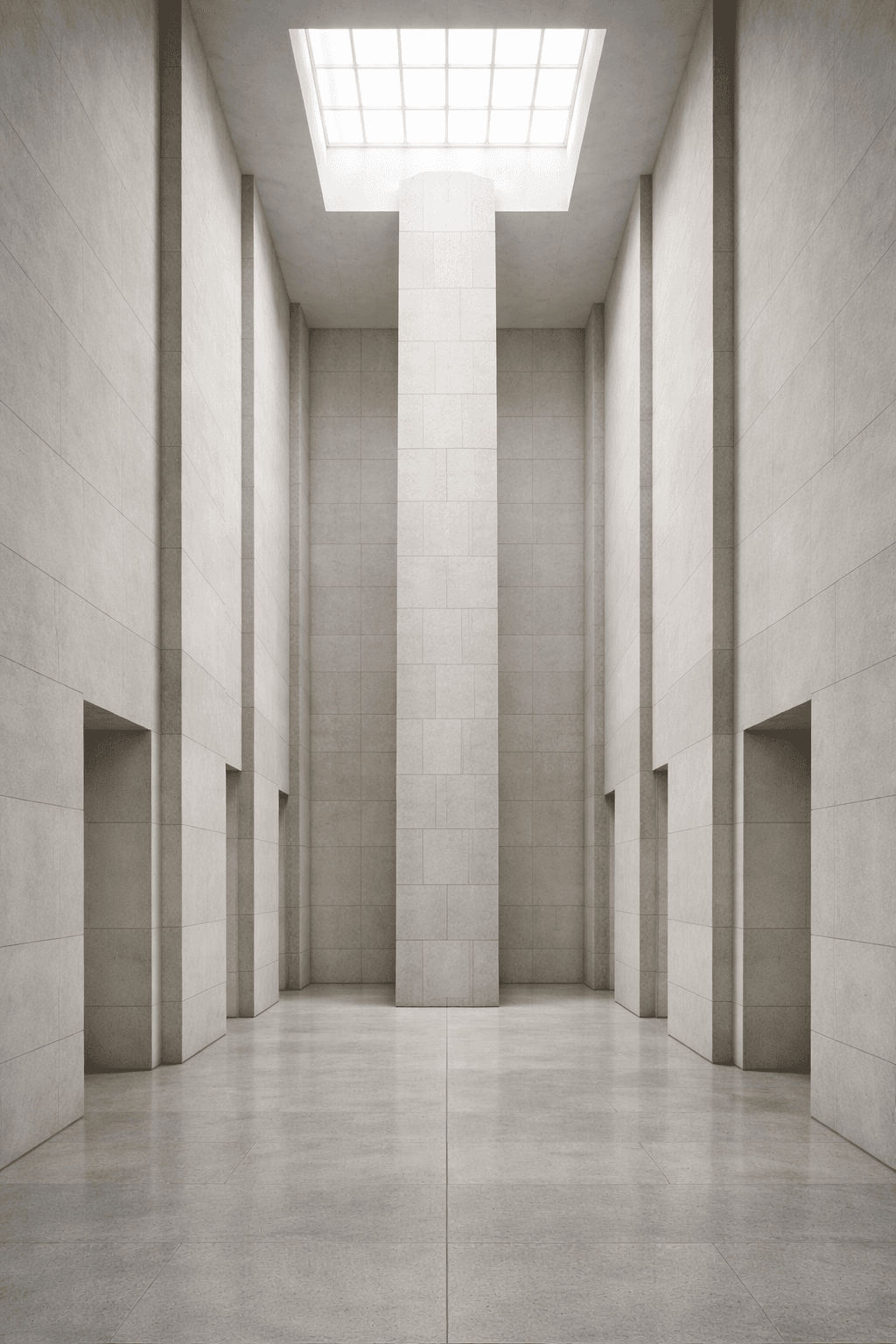
Plate IV — Verticality
Structural intent
Represent upward dominance via vertical lines and stacked structure. Verticality is treated as a measurable orientation, not an emotional claim.
What must be observable
- Dominant vertical lines (columns, pillars, trunks, shafts) occupying most of the frame.
- Clear upward extension (top-to-bottom continuity).
- Minimal diagonal influence; verticals should remain primary.
- A grounding base (floor/footing) that makes “up” measurable.
Common failure modes
- Vertical lines present but secondary to diagonals or horizontals.
- Cropping that removes base or top, weakening measurable vertical extent.
- Wide-angle distortion that bends verticals excessively (unless controlled).
- “Tall subject” without structural vertical geometry (scale alone is insufficient).
UI / system translation (non-symbolic)
- Use for “status / health / progress” concepts where directionality is helpful.
- In UI: vertical progress stacks, pillar charts, or central spine layouts.
- In system terms: prioritize a primary vertical layout axis and align modules to it.
- QA: enforce vertical line dominance and require base presence.